
The Workforce Equation: Training Omani Talent vs Importing Expertise
A healthcare system cannot scale without the right workforce behind it. As Oman advances toward Vision 2040, the focus is shifting from importing talent to building a sustainable, locally trained workforce. This post explores the tradeoffs, the risks, and the long-term strategy required to develop healthcare professionals who can support the system for years to come.
Shereese Maynard, MS, MBA, Chief Innovation Officer
4/20/20263 min read

There is a question every healthcare system must answer at some point.
Do we build our workforce, or do we borrow it?
For years, many systems have relied on importing healthcare professionals to meet demand. It works in the short term. Gaps are filled. Services expand. Facilities stay operational.
But over time, the cracks begin to show.
Turnover increases. Costs rise. Continuity of care becomes harder to maintain. And the system becomes dependent on a workforce that was never designed to stay.
Oman is at a point where this question is no longer theoretical. Vision 2040 makes the direction clear. A sustainable healthcare system must be supported by a strong, locally developed workforce. This is not just a workforce issue. It is a system design decision.
The Limits of Imported Expertise
Bringing in experienced professionals can accelerate growth. There is no debate there. Specialists can fill immediate clinical gaps. New facilities can open faster. Knowledge can be transferred into the system.
But reliance on imported expertise creates structural challenges:
High recruitment and onboarding costs
Variable retention rates
Cultural and communication gaps in care delivery
Limited long-term workforce stability
Over time, this model becomes expensive to maintain and difficult to scale.
It solves today’s problem while quietly creating tomorrow’s.
Building a Workforce That Stays
Developing local talent requires more time and planning, but it creates something far more valuable.
Consistency.
When healthcare professionals are trained within the system:
They understand local patient needs and expectations
They build long-term relationships with communities
They grow into leadership roles within the system
This is the foundation of continuity of care.
Oman’s focus on workforce development is not just about employment. It is about building a healthcare system that can sustain itself without constant external input.
Training Must Be Structured, Not Informal
One of the common mistakes in workforce development is assuming that exposure equals training.
It does not. Effective workforce development requires structured programs that are aligned with real clinical needs. This includes:
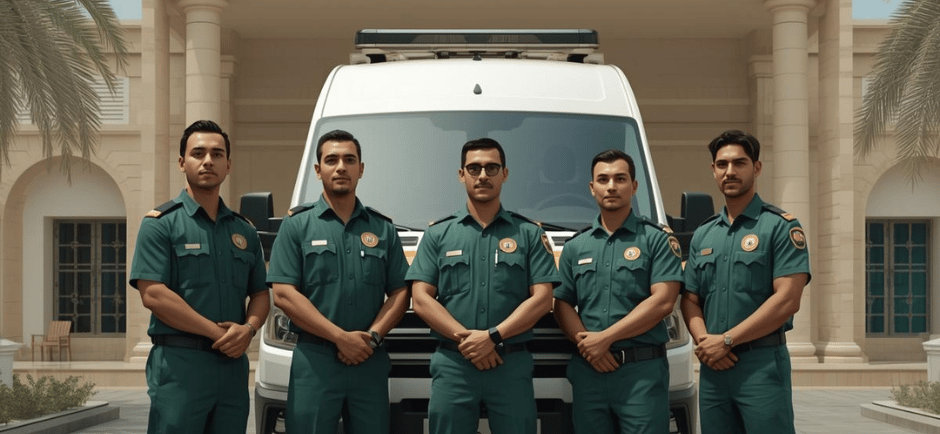
EMT and emergency response training designed for Oman’s geography
Nursing and allied health programs with strong clinical components
Advanced practice roles such as nurse practitioners to extend care capacity
Training must also be consistent. Standardized curricula, measurable competencies, and ongoing evaluation are essential.
Without structure, training produces variability. Variability introduces risk.
The Role of Technology in Workforce Development
Modern workforce development does not happen only in classrooms. Technology now plays a central role in how healthcare professionals are trained and supported. This includes:
Simulation-based training for clinical scenarios
Remote learning platforms to expand access to education
Smart clinical tools that support decision-making in real time
Solutions from companies like Heidi Health, an Amana-Evershine partner, demonstrate how hardware and software can support both training and real-world care.
When used correctly, technology shortens the learning curve and improves consistency across the workforce.
Balancing Short-Term Needs with Long-Term Strategy
This is where many systems struggle.
You cannot stop importing talent overnight. The system still needs to function. Patients still need care.
But continuing without a transition plan creates long-term risk.
The goal is balance:
Use imported expertise where necessary
Pair it with structured knowledge transfer
Invest in local training programs at the same time
This creates a gradual shift from dependence to self-sufficiency.
It is not an either-or decision. It is a phased strategy.
What we hope you'll take away
A healthcare system is only as strong as the people delivering care.
If the workforce is unstable, the system is unstable.
If training is inconsistent, care is inconsistent.
If retention is low, costs rise and continuity suffers.
For Oman, building a local healthcare workforce supports more than clinical outcomes.
It strengthens the economy.
It builds national capability.
It reduces long-term dependency on external labor markets.
For ministries, this aligns with national development goals. For providers, it creates a more reliable and engaged workforce. For partners, it opens opportunities to support training, education, and workforce enablement.
Infrastructure can be built in years. Workforces take decades.
The decisions made today about training, recruitment, and workforce strategy will shape Oman’s healthcare system for a generation. The organizations that understand this will invest accordingly. Not just in facilities. Not just in technology. But in people. Because in the end, healthcare is still delivered one patient at a time.