
From Infrastructure to Intelligence: Building a Digitally Mature Health System in Oman
Digital transformation in healthcare is often misunderstood as a technology upgrade. In reality, it is a system redesign. This article breaks down how Oman can move from infrastructure to intelligence and what it takes to build a truly connected and responsive health system under Vision 2040.
Shereese Maynard, Ms, MBA, Chief Innovation Officer
4/26/20263 min read
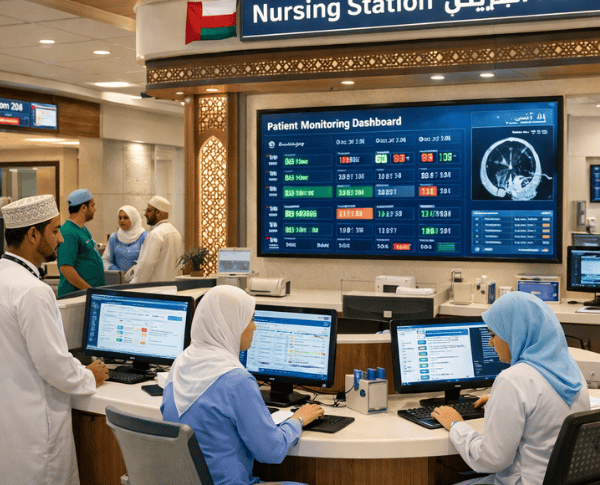
There was a time when building a hospital was enough. You needed beds. Equipment. Staff. A functioning building meant access to care. That time has passed. Today, the question is not whether a facility exists. The question is whether it can think, connect, and respond in real time.
This is where Oman is headed.
Vision 2040 is not just about expanding healthcare infrastructure. It is about transforming that infrastructure into an intelligent system. One that uses data, connectivity, and technology to improve care at every level.
Let’s break down what that actually means.
Step One: Connecting the System
Many healthcare systems grow in layers.
A hospital installs one system. A clinic installs another. A private provider uses something else entirely. Over time, you end up with islands of information. Oman cannot afford that model moving forward. A digitally mature system connects:
Public and private providers
Hospitals, clinics, and pharmacies
Clinical, administrative, and financial data
At the center of this is interoperability.
Not as a technical feature, but as a national requirement.
When systems are connected, information follows the patient across settings. Clinicians have access to complete records. Decisions are made faster and with greater confidence.
Step Two: Turning Data into Insight
Collecting data is easy. Using it well is not.
Most systems already have large amounts of data. The problem is that it sits unused or is only reviewed after problems occur. A mature system uses data to act early. This includes:
Identifying high-risk patients before complications develop
Tracking disease trends across regions
Monitoring hospital capacity and staffing in real time
This is where analytics and artificial intelligence come into play.
Not as buzzwords, but as tools that support better decisions at the clinical and operational level.
When data is used well, it shifts the system from reactive to proactive. Leaders can plan with clarity. Clinicians can intervene earlier. Resources can be allocated where they are needed most.
Step Three: Extending Care Beyond Facilities
A digitally mature system does not stop at the hospital door. In Oman, geography matters. There are communities where access to centralized care is limited. Technology helps close that gap. This includes:
Telehealth consultations for remote patients
Remote monitoring for chronic conditions
Mobile diagnostic tools for field-based care
Care becomes something that travels to the patient, not the other way around.
This model supports continuity. Patients stay connected to care teams even when they are not physically present. It also reduces the strain on centralized facilities.
Step Four: Designing for the People Using It
One of the most common mistakes in digital health is overengineering. Systems are built with features, but not with users in mind. A digitally mature system in Oman must work for:
Clinicians who need speed and clarity
Patients who may have varying levels of digital literacy
Administrators who need actionable insights
If a system is difficult to use, it will be ignored or worked around.
Design must reflect real workflows. Interfaces must reduce friction, not add to it. Training and support must be part of implementation, not an afterthought.
Step Five: Protecting the System While It Scales
As systems become more connected, they also become more exposed.
Cybersecurity is no longer an IT issue. It is directly tied to patient safety and operational continuity.
A mature system must include:
Strong data protection protocols
Continuous monitoring for threats
Clear governance around data access and use
Security must be embedded from the beginning. Retrofitting protection into a connected system is far more complex and far less effective.
Trust, once lost, is difficult to rebuild.
Why All This Matters
A digitally mature health system is not a luxury. It is the difference between a system that keeps up and one that falls behind.
Without connectivity, care becomes fragmented.
Without insight, decisions are delayed or misinformed.
Without reach, access remains uneven.
Without usability, adoption fails.
Without security, trust breaks.
For Oman, the goal is not to digitize healthcare for the sake of modernization. The goal is to build a system that supports a growing population, effectively manages chronic disease, and delivers consistent care across regions.
For healthcare leaders, this means making deliberate choices about infrastructure, data, and partnerships.
For ministries, it means setting standards that ensure systems work together, not apart.
For organizations entering the market, it means understanding that technology alone is not the value. The value is in how that technology strengthens the system as a whole.
Here's the thing
Oman has an opportunity that many systems do not. It can be built with intention. Instead of fixing fragmented systems later, it can design a connected, intelligent system from the start. That requires discipline. It requires alignment. And it requires partners who understand that digital maturity is not about tools. It is about outcomes.
The organizations that recognize this will not just support Oman’s healthcare future. They will help shape it.